How stuttering is manifested across languages
An ISF-funded study investigating how stuttering is expressed across different languages in bilingual children.
Dr. Sveta Fichman and Dr. Dvora Freud
Click to participateWe study how children growing up with more than one language experience stuttering — and how clinicians, researchers, and families can better understand it.
Hello in the many languages spoken by the families in our studies
languages spoken in Israel
of children in Israel grow up bilingual
ages of the children we study
home languages we study — plus Hebrew
We are inviting children who stutter and children who do not stutter — ages 7–17 who speak English, Russian, French, Yiddish, Amharic, Arabic, or Spanish at home (plus Hebrew). We also welcome children who speak only Hebrew.
English · Hebrew · Russian · Yiddish · French · Arabic · Amharic · Spanish
Our vision: Each child is unique; bilingualism and speech patterns like stuttering are simply manifestations of that uniqueness. In our lab, we translate this philosophy into action. Through large-scale studies, we work to better understand these diverse communication profiles to provide every child with the support they deserve.
An ISF-funded study investigating how stuttering is expressed across different languages in bilingual children.
Dr. Sveta Fichman and Dr. Dvora Freud
Click to participateA NIPI-funded study measuring how often stuttering occurs in bilingual populations compared with monolingual peers.
Dr. Sveta Fichman
Click to participateDid you know? More than 50 different languages are spoken in Israel, and over 50% of children are raised bilingual.
Who are Heritage Speakers? What is a Heritage Language?
Heritage speakers grow up with a language at home that is different from the majority language around them. Their development is rich, unique, and often misunderstood.
When does stuttering first appear?
Stuttering typically begins between ages 2 and 5, during the most rapid period of language development.
What should I do?
Early awareness and supportive communication make a difference. Our For Parents page walks you through what to expect and when to seek help.
We aim to create a large database of speech — stuttered and non-stuttered — from bilingual speakers of different languages. This helps us understand how language proficiency interacts with stuttering, and whether stuttering changes depending on which language a child is speaking.
Rigorous research that stays human — useful to the families living the questions we study.
Bilingual children and adults have a unique, rich language development. We treat it as a strength, not a complication.
Because current clinical tools are built for monolingual populations. We want to change that.
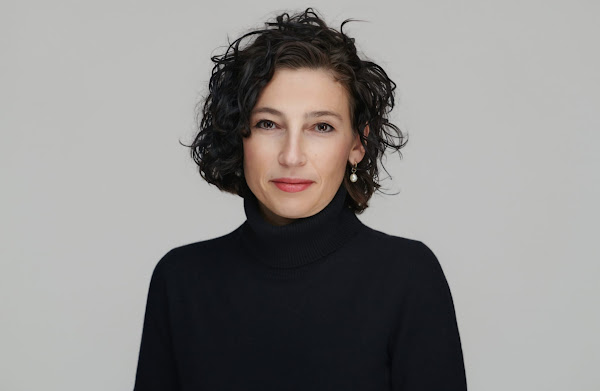
Principal Investigator
Dr. Sveta Fichman is a clinical linguist, researcher, and university lecturer specializing in the complex interaction of bilingualism, language acquisition, and atypical speech and language development. She holds a Ph.D. in Clinical Linguistics and serves as a faculty member and lecturer at several academic institutions, including Jerusalem Interdisciplinary College (Department of Communication Disorders) and Talpiot College of Education (Child Development). Her current research focuses on manifestations of stuttering in children and adolescents from diverse Heritage Language backgrounds. In 2026, she and Dr. Dvora Freud were awarded a prestigious Israel Science Foundation (ISF) grant to lead a multidisciplinary study investigating communication strategies and attitudes among bilingual school-age children.
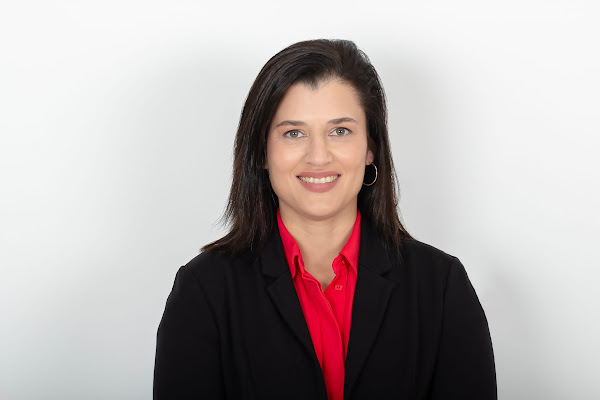
Co-Principal Investigator
Dr. Dvora Freud (Ph.D.) is a communication clinician and a senior faculty member of the Department of Communication Disorders at Tel Aviv University. Fluency disorders are her main field of interest in her clinical work, as well as in teaching and research.
We present our research in ways that serve different audiences. Pick the perspective most relevant to you.
Stuttering has neurological roots. Bilingualism does not cause it. Children who stutter benefit from keeping all their languages — dropping the home language does not improve fluency, and weakens family connection.
Bilingual children reach the same developmental milestones as monolingual peers. Their total vocabulary across languages is comparable, and the cognitive flexibility that bilingualism supports has lifelong benefits.
Standardized stuttering assessments were developed on monolingual populations. When applied to bilingual children without adjustment, they produce systematic over- and under-identification. Pairing these tools with culturally informed norms reduces misclassification.
The OASES assessment captures how stuttering affects the speaker's life beyond observable disfluencies. In bilingual clinical work, pairing it with language-specific disfluency sampling yields a fuller picture than either approach alone.
More than 50 languages are spoken in Israel, and over half of Israeli children are raised bilingual. This density of language contact — combined with a relatively small geographic footprint — creates conditions for collecting typologically diverse data without the usual logistical overhead.
Our ISF project pairs free-speech and structured-elicitation tasks in each of the child's languages, timing-matched to control for language activation effects. The sampling protocol, stimulus set, and coding manual are available upon request.