Lab Bulletin

Announcements, events, and updates from the lab.

ISHLA 2026 conference logo

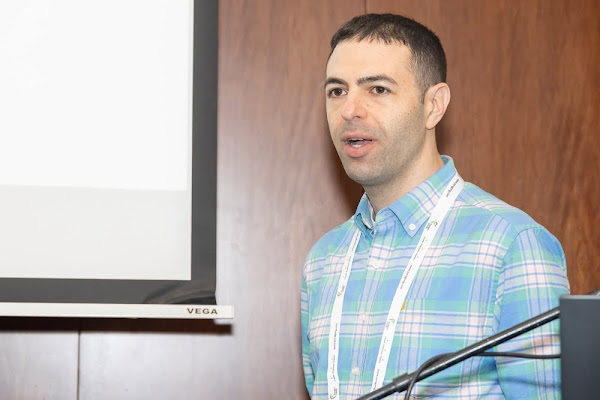
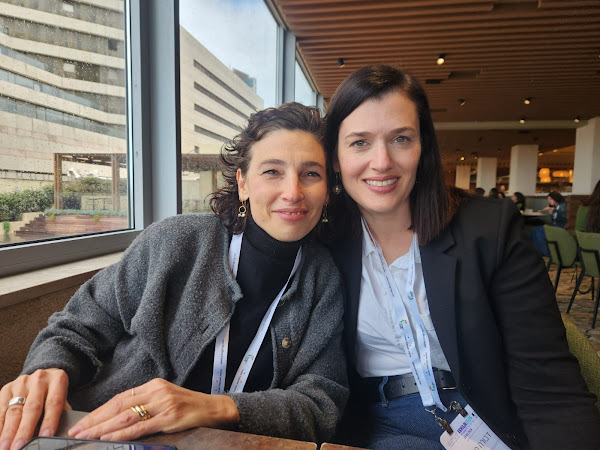
ISHLA 2026 — Building Bridges of Communication

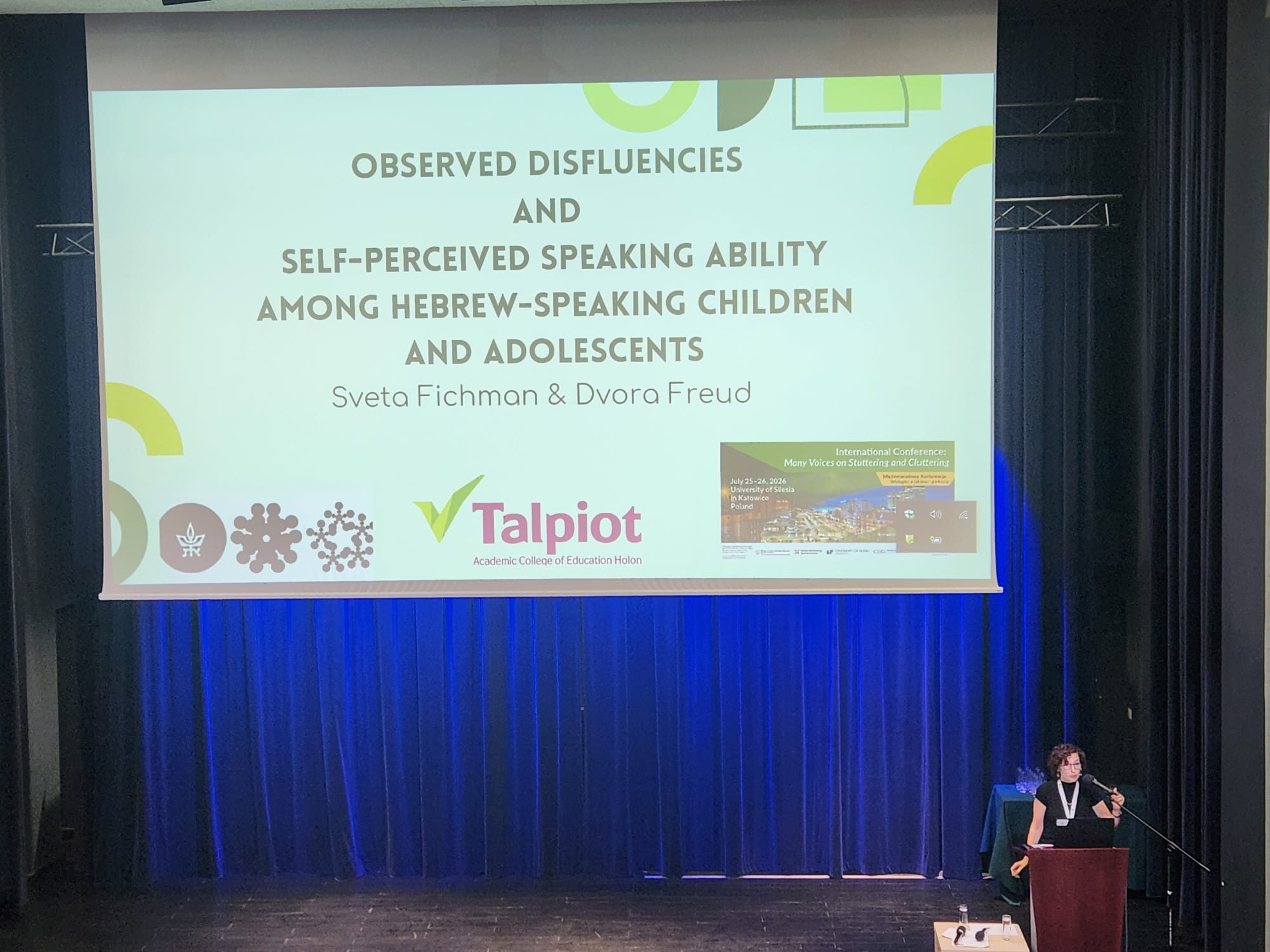
At ISHLA 2026 in February our team had two talks and one symposium.

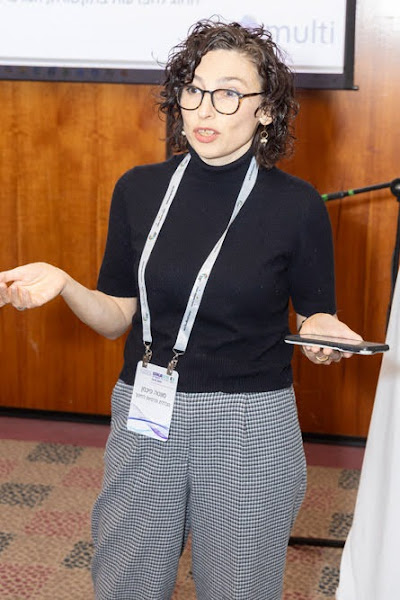
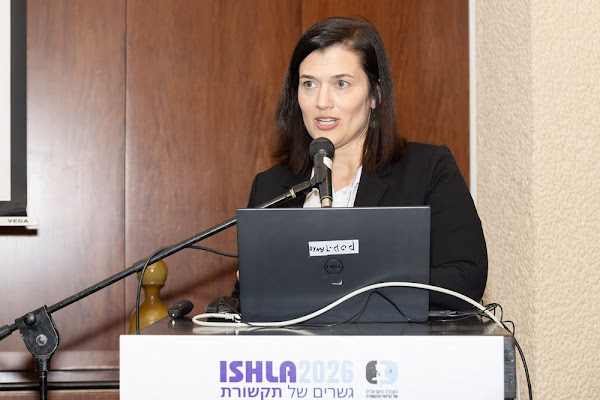
Dr. Sveta Fichman chaired a specialized symposium titled "Mapping Narrative Skills in Multicultural Groups", exploring how diverse linguistic and cultural backgrounds influence the development and assessment of narrative abilities in children.

Dr. Dvora Freud presented in the Stuttering and Voice session, contributing to the discussion on clinical interventions and the psychological factors involved in speech disorders.

Itamar Guy presented our lab's initial results on disfluencies in bilingual Yiddish–Hebrew children and their communication attitudes.

ISHLA 2026 — Building Bridges of Communication — 1ISHLA 2026 — Building Bridges of Communication — 2ISHLA 2026 — Building Bridges of Communication — 3ISHLA 2026 — Building Bridges of Communication — 4
14th Oxford Stuttering and Cluttering Research Conference logo

14th Oxford Stuttering and Cluttering Research Conference

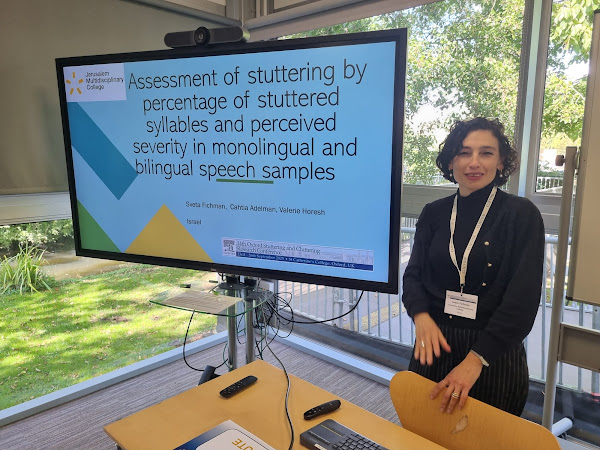
Dr. Sveta Fichman presented "Assessment of stuttering by percentage of stuttered syllables and perceived severity in monolingual and bilingual speech samples." The study evaluated how Speech-Language Pathologists (SLPs) assess disfluency across three groups — a bilingual child who stutters, a bilingual child who does not stutter, and a monolingual child who stutters.

The findings indicate that while SLPs often perceive non-stuttered bilingual speech as having high disfluency rates (exceeding 3%), stuttering severity proved to be a more sensitive and accurate measure for distinguishing bilingual children who stutter from those who do not.

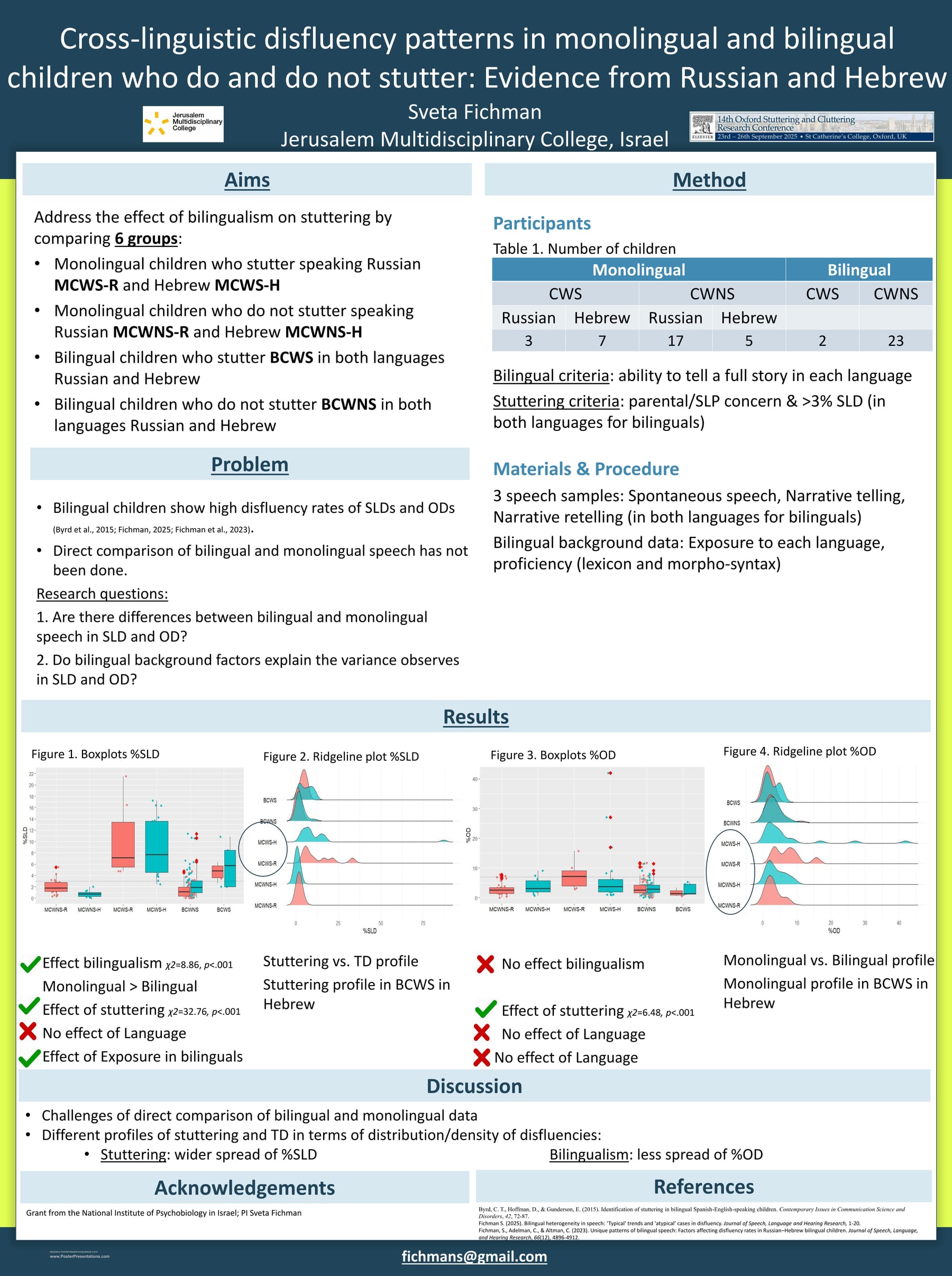
Sveta also presented a poster comparing disfluency patterns across six groups: monolingual children who stutter speaking Russian; monolingual children who stutter speaking Hebrew; monolingual children who do not stutter speaking Russian; monolingual children who do not stutter speaking Hebrew; bilingual Russian-Hebrew children who stutter; and bilingual Russian-Hebrew children who do not stutter.
Download the six-groups poster (PDF)
14th Oxford Stuttering and Cluttering Research Conference — 114th Oxford Stuttering and Cluttering Research Conference — 2

New recruitment posters

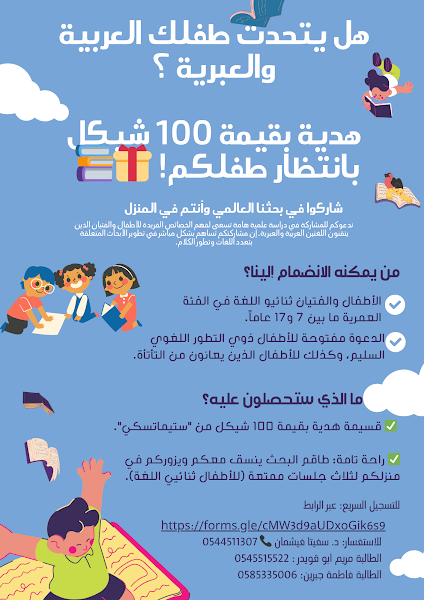
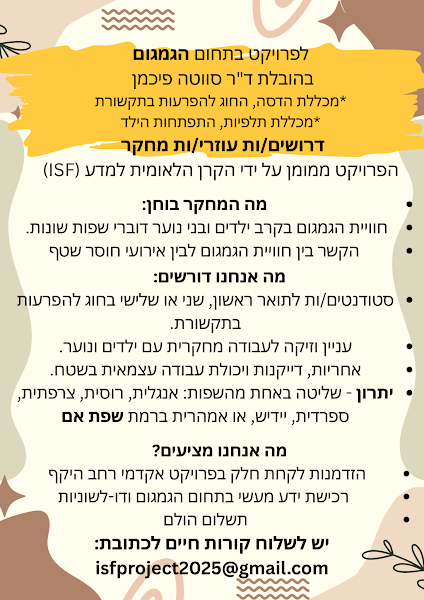
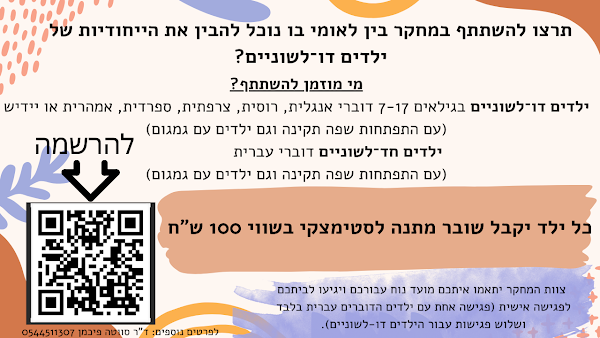
Share these posters in schools, clinics, and community groups. They invite children ages 7–17 — across eight home languages plus Hebrew — to join our ISF and NIPI studies. Every participating family receives a 100 NIS voucher as a thank-you.

New recruitment posters — 1New recruitment posters — 2New recruitment posters — 3

We are recruiting! Children ages 7–17, 8 languages

Our ISF and NIPI studies are now recruiting. Children ages 7–17 who speak English, Russian, French, Yiddish, Amharic, Arabic, Spanish, or only Hebrew are invited to participate. Families receive a 100 NIS voucher.

Welcome to the new Bilingualism and Stuttering Research Lab site

A fresh home for the lab — for parents looking to participate, clinicians seeking tools and evidence, and researchers looking to collaborate. Explore the site, and get in touch.